VEVOR Fuel Container, 19 L, Gas Tank with Spout & Clear Scale, 15 L/min Max Flow Rate, Secure & Leak-proof, Portable Flat Fluid Container for Most Cars Motorcycle ATV UTV, Red, 2 Packs

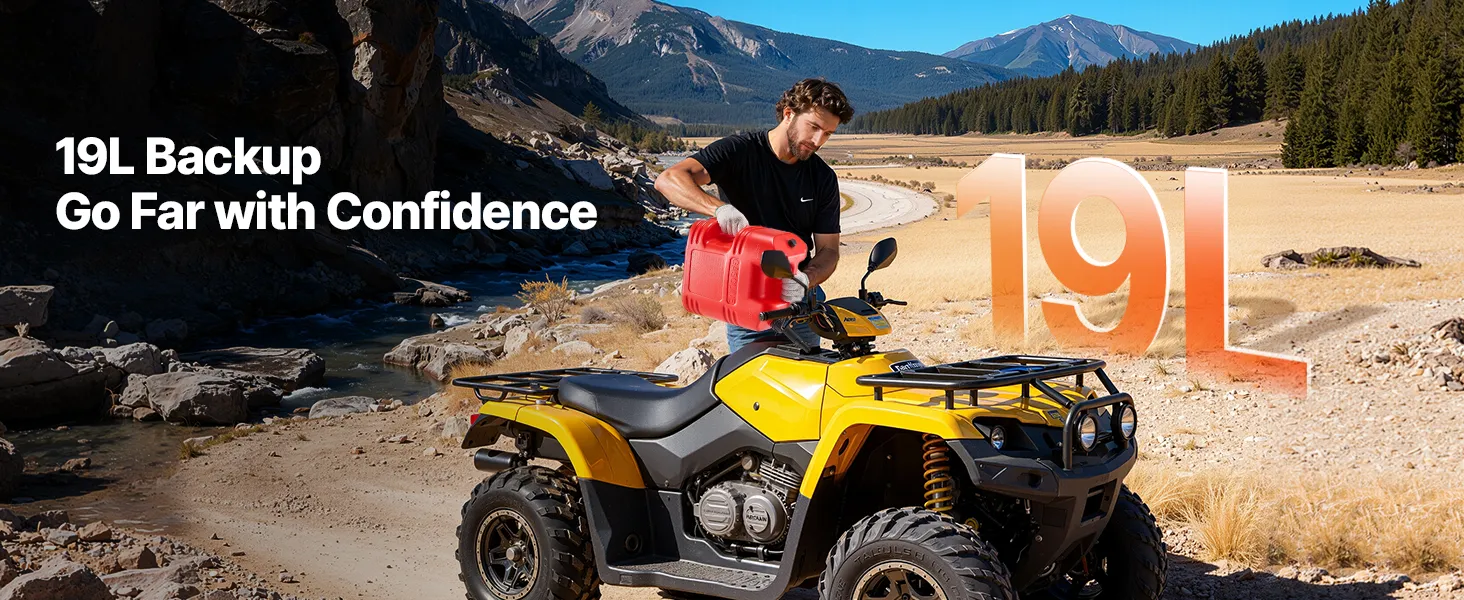
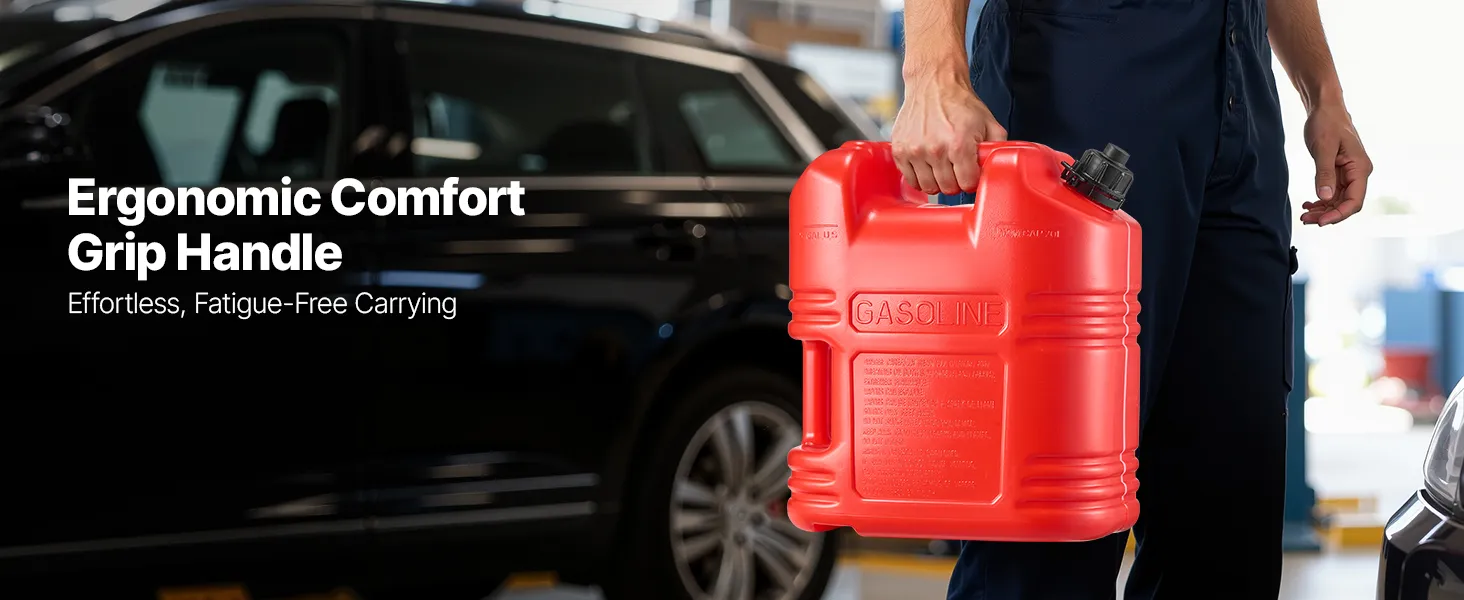
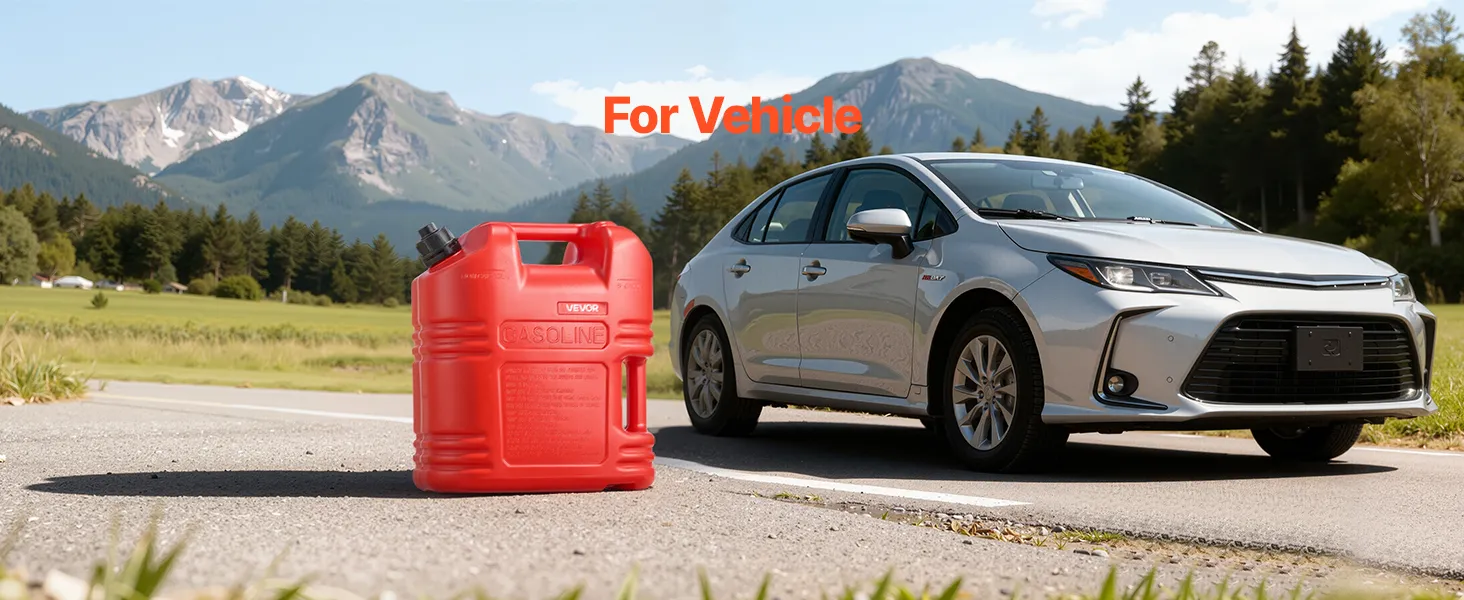
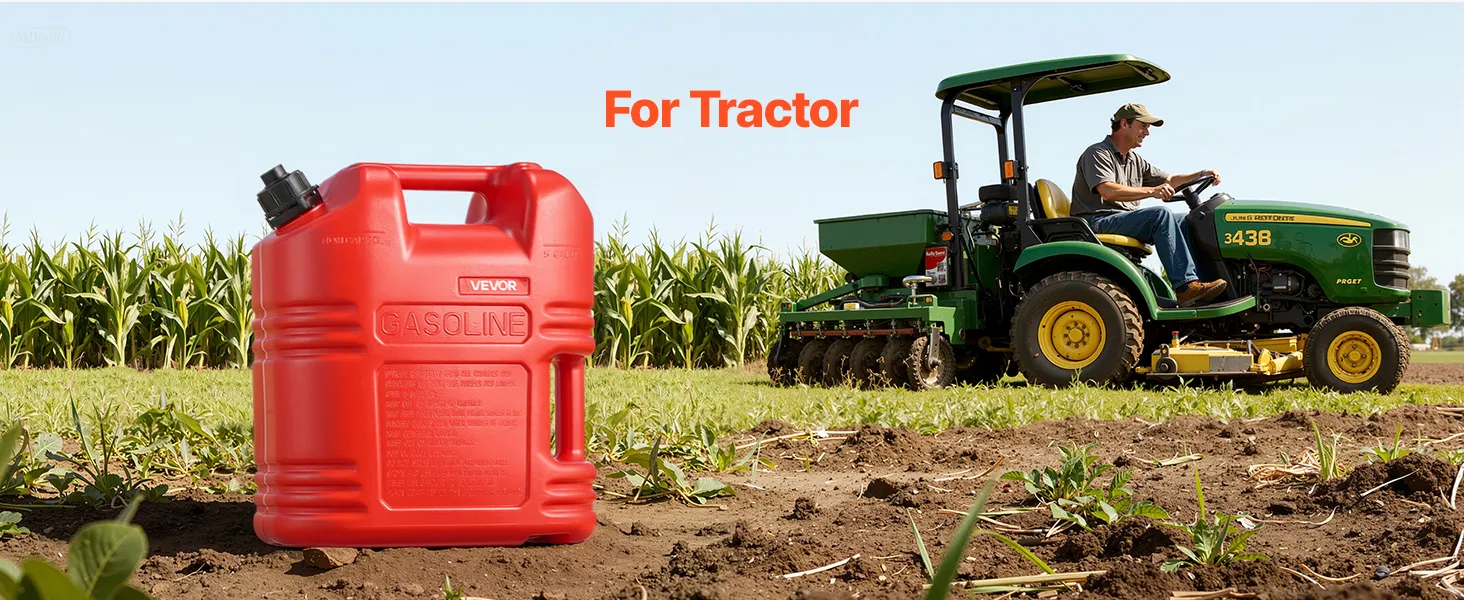
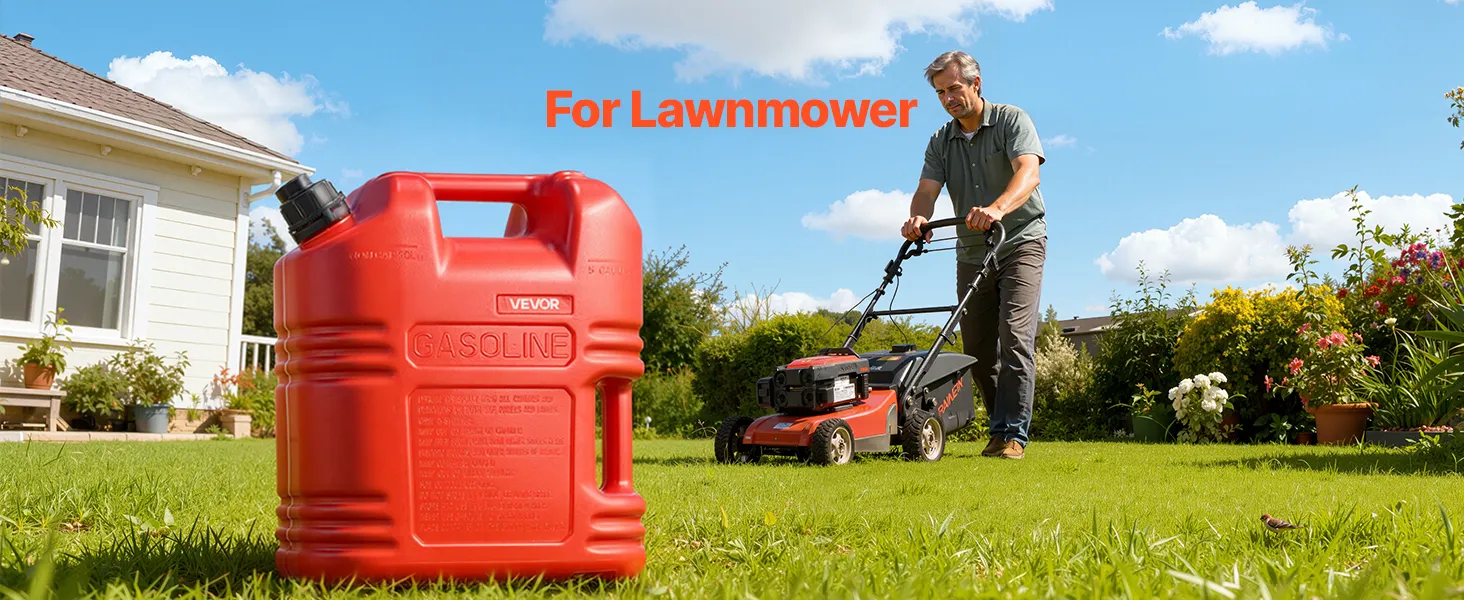
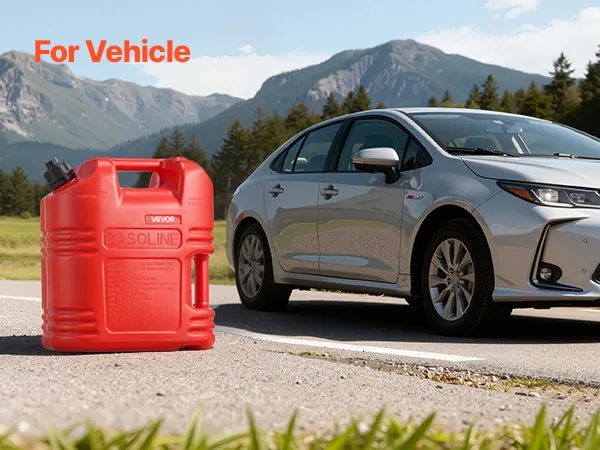
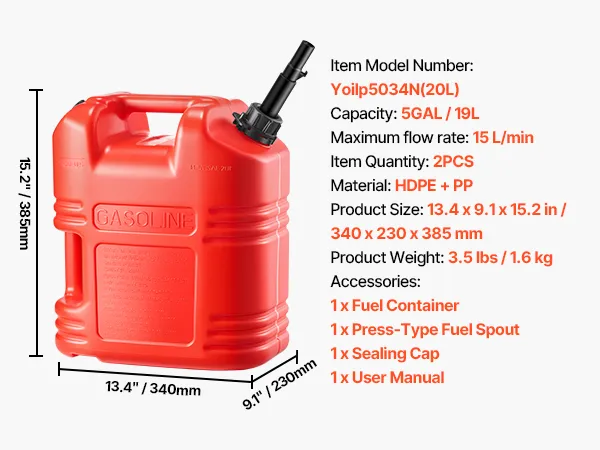
- Compact Size: Need backup fuel without losing space? This 19L gas can (13.4 x 9.1 x 15.2 inches) fits right in your trunk. It's lightweight yet reliable for trips, camping, or outdoor work
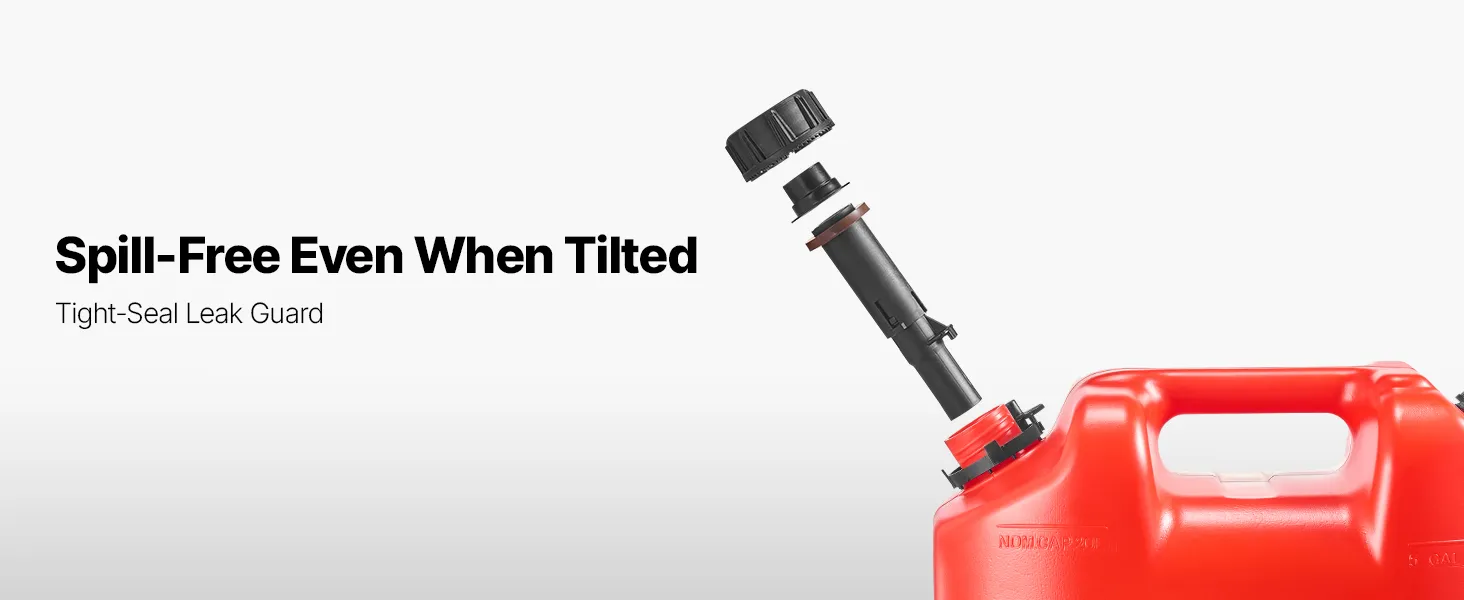
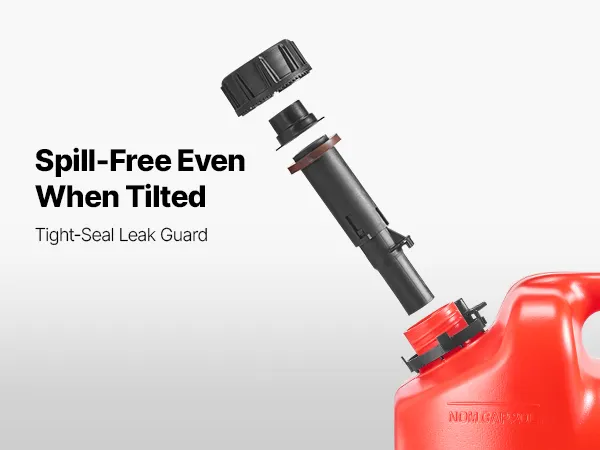
- Secure Anti-Loosening: Hate messy leaks? This fuel container comes with a sealing ring that locks tight, even on rough rides, keeping fuel where it belongs without waste
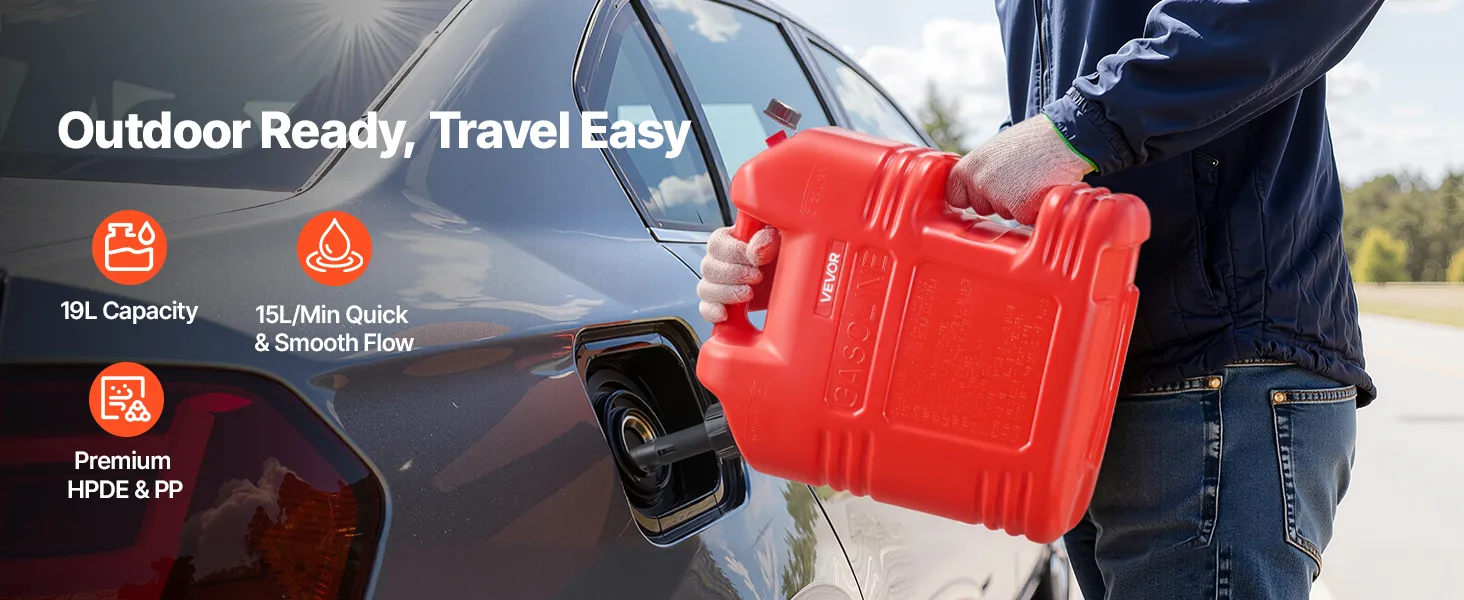
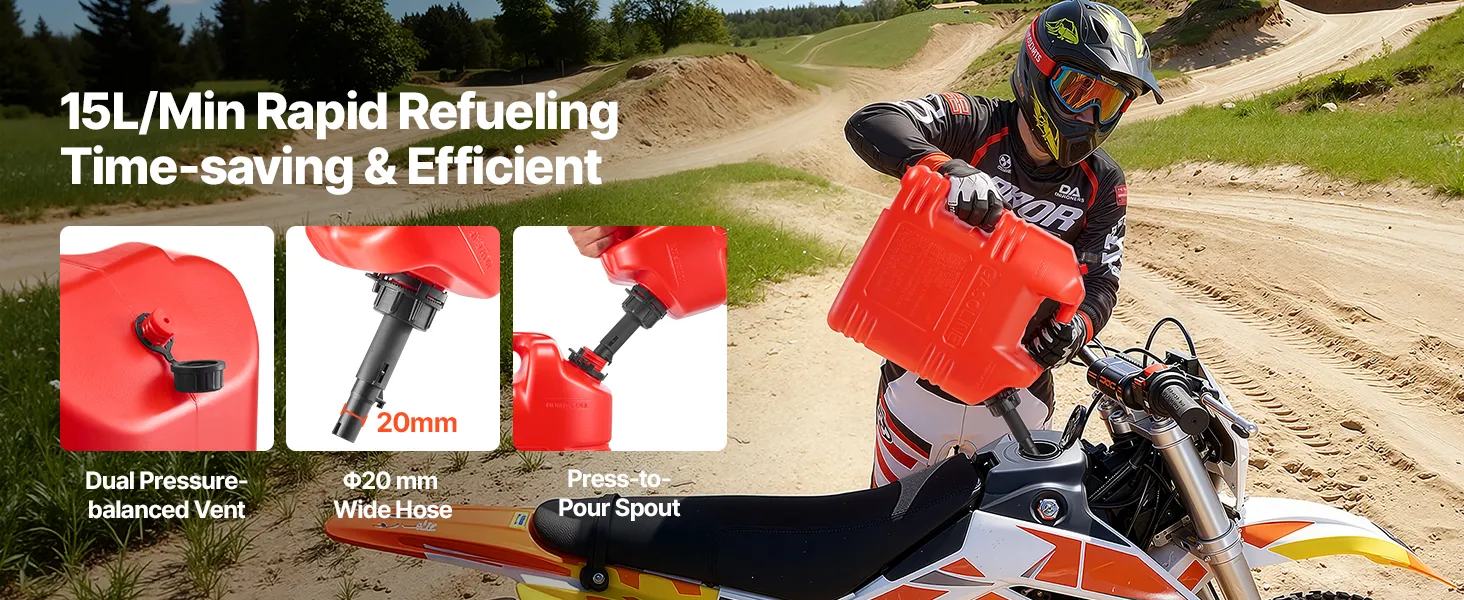
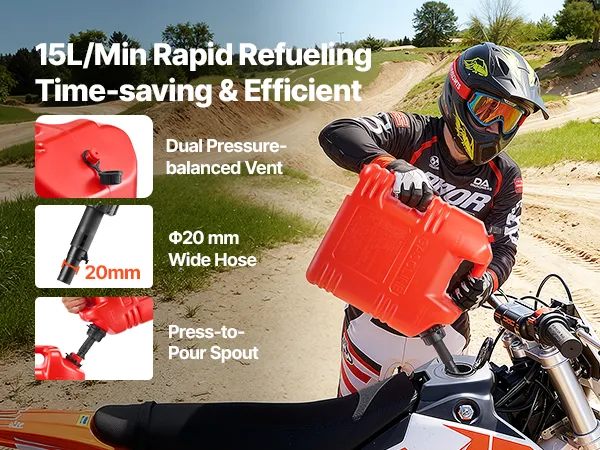
- Smooth 15 L/min Fast Flow: Done with "glug-glug" refills? This fuel can pours up to 15 L/min with a 20 mm hose and dual vent valve for a steady, smooth flow every time
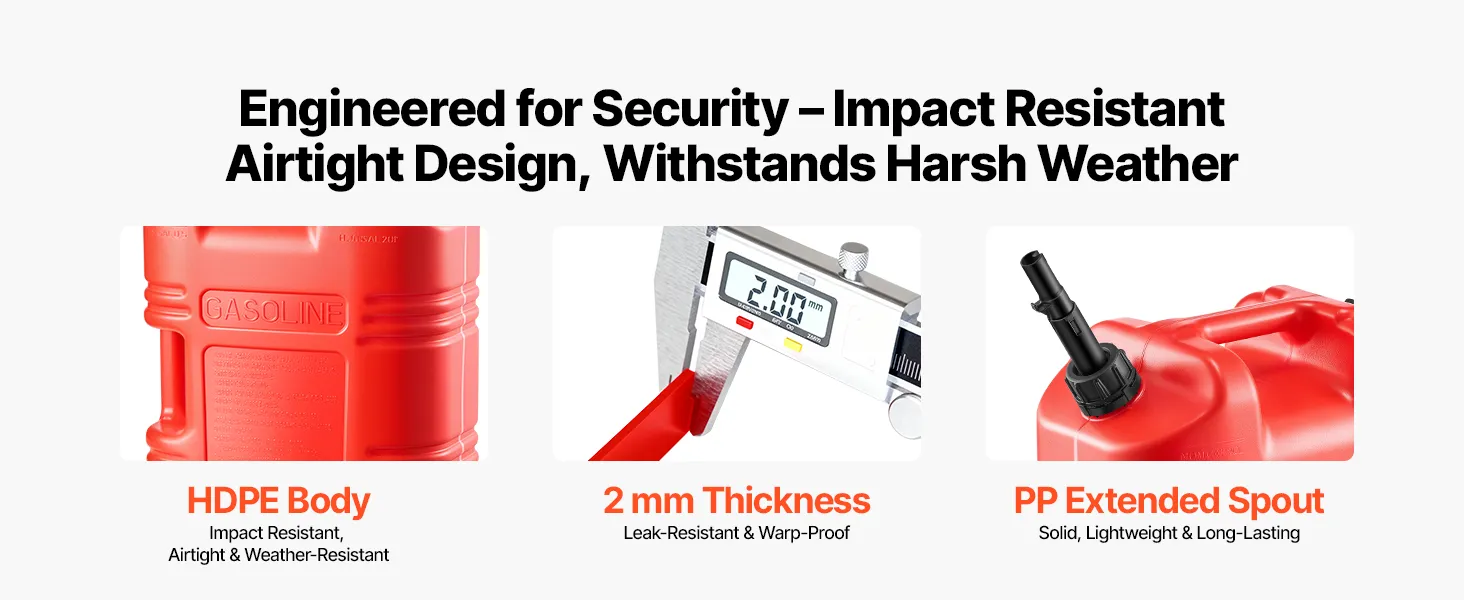
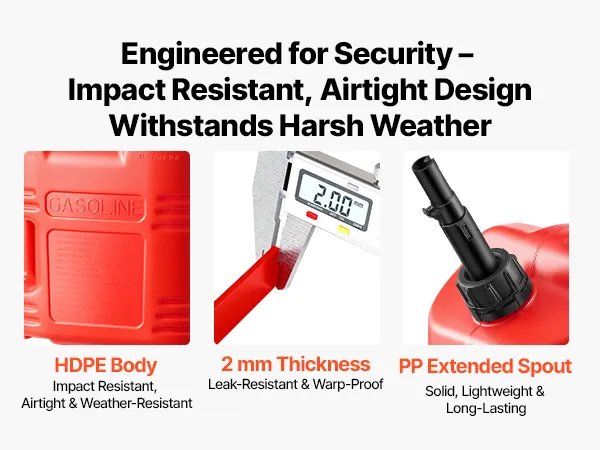
- Long-lasting Design: Want durability? This HDPE fuel tank has 2 mm walls that withstand drops, bumps, and sun. The PP extension spout makes every refill easy and clean
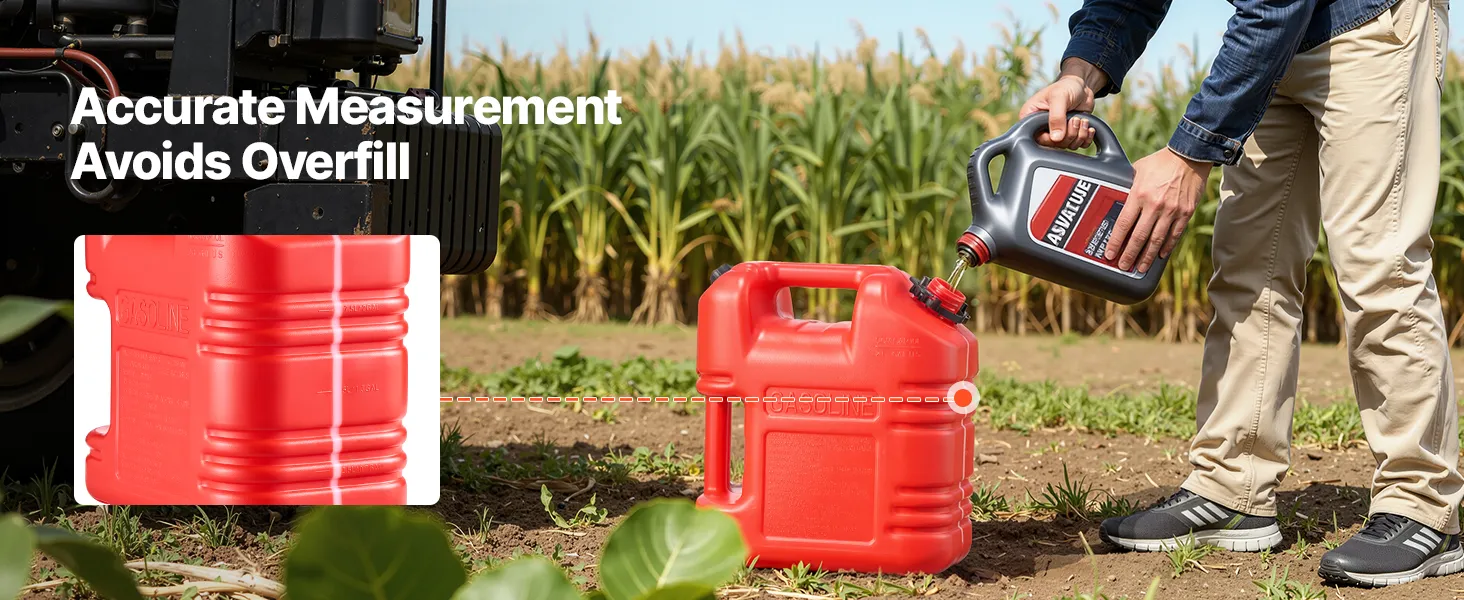
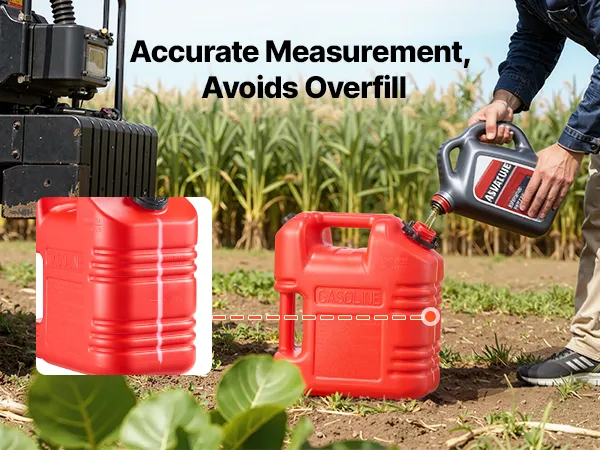
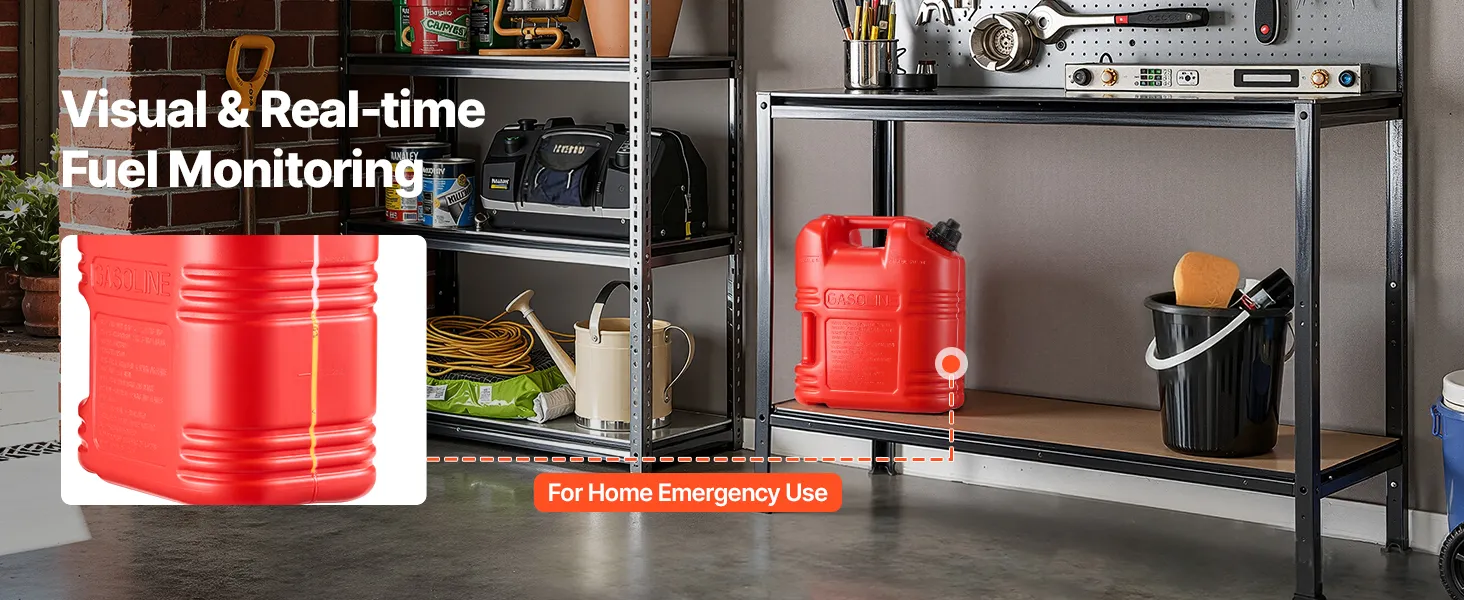
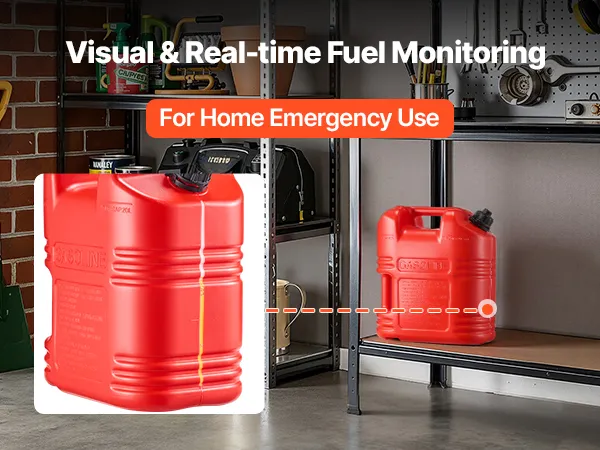
- Durable & Accurate Measurement: Need precise readings? The raised markings show real capacity, helping you avoid spills, waste, or underfilling with quick, accurate checks
Frequently Bought Together
Reviews
 Zdenek goetz.anhofer@gmx.de
 Mark
Mark 
 ty***
ty*** About this item
Will this tank leak or have its cap pop off on rough roads?
A: It has a secure locking cap and tight seal, so even on bumpy rides it stays sealed and leak-free.
Q: What's the material? Will it crack or warp in heat?
A: Made of thick HDPE (~2 mm walls), impact-resistant and heat-stable to avoid warping.
Q: Does it gurgle or clog when pouring?
A: It has a vent valve plus wide pouring tube—flow is smooth and almost silent.
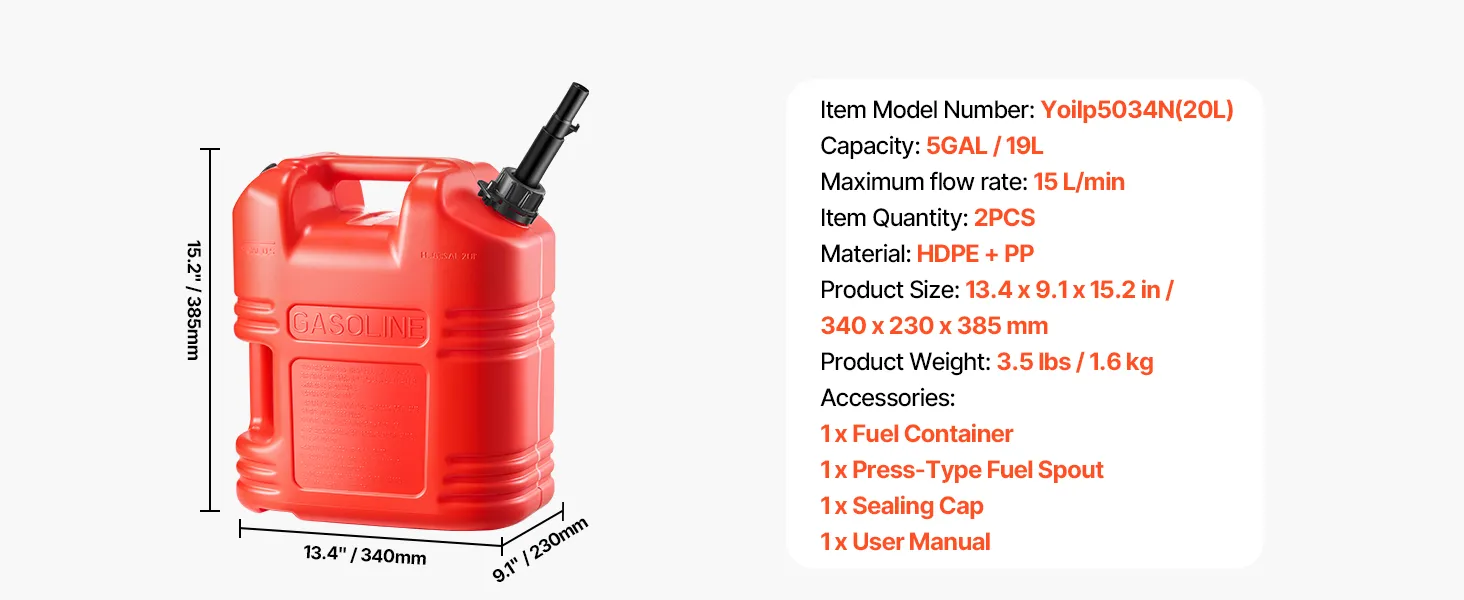
VEVOR Plastic Fuel Container Delivers 2 x 19L Capacity in One Value Pack
When you buy the VEVOR plastic fuel container, you get 2, giving you a total of 38 liters of portable backup fuel storage. Each unit can hold a full 19 liters in a flat body that is 13.4 x 9.1 x 15.2 inches. This feature makes it easy to fit in car trunks, ATV cargo racks, and UTV beds without taking up too much space. Two containers stored together take up the space of one big round jerry can, but they hold twice as much fuel.
The 2-pack setup means that families with more than one car, generator, or outdoor power tool don't have to buy separate containers for each vehicle. Each 19-liter unit can add 25-50 miles of emergency range, depending on the engine size. It means operators have two completely separate fuel reserves that can be used in two vehicles or at two different field locations without splitting the supply from a single container.
15 L/min Flow Rate via 20mm Hose and Dual Vent Valve Ends Slow Gurgling Pours
With a 20mm diameter hose and a dual vent valve system, each plastic fuel container in this two-pack can empty at a maximum rate of 15 liters per minute. The two vents keep the pressure even while pouring by separating the air intake path from the fuel outlet. It stops the air-lock gurgling that happens when you pour from a single-vent container. Each full 19-liter container empties in about 80 seconds at 15 L/min.
This fast transfer rate is very useful when you need to refuel several vehicles or generators in a row at remote campsites or construction sites where you want to keep downtime to a minimum. The 20mm hose bore reduces flow resistance inside the container throughout the entire pour cycle. It helps maintain a flow rate of about 15 L/min from the first pour to the last drop, rather than dropping off as the container empties.
2mm HDPE Walls Withstand Drops, UV Exposure & Long-Term Fuel Contact
The body of each container is made of high-density polyethylene, and all panels, base sections, and shoulder joints have a 2mm wall thickness. This structural specification can withstand the shock from drops, shifting cargo, and rough-road vibrations without cracking or splitting at stress-concentration points. When containers are stacked in a vehicle or a warehouse, the 2mm HDPE build keeps its shape even under load.
HDPE is naturally resistant to gasoline, diesel, and ethanol-blend fuels. It helps prevent the walls from breaking down, the fuel from becoming dirty, and microcracks from forming over the years of filling and draining. Each plastic fuel container is resistant to surface chalking, brittleness, and structural weakening from prolonged outdoor exposure to sunlight, thanks to its red-colored HDPE formulation and UV stabilization.
Anti-Loosening Sealing Ring Prevents Leaks Across Rough Off-Road Terrain
Each unit's cap assembly features a compression-fit sealing ring and an anti-loosening retention mechanism that maintains a steady closure force even when the unit is vibrating, moving sideways, or repeatedly struck while being transported off-road. Standard threaded caps gradually loosen under constant vibration. It creates paths for fuel vapor to escape and for liquid to seep through, which can contaminate vehicle cargo areas and increase the risk of fire on long trips.
The anti-loosening design keeps the full sealing ring compressed, even on rough roads like gravel tracks, trail systems, and unpaved construction access roads. This near-zero-leak closure performance is very important when both containers are stored together in a closed SUV cargo area or an ATV storage box. It makes sure that neither unit releases fuel vapor or liquid into the shared storage space, even on rough terrain and during long trips.
Plastic Fuel Container PP Extension Spout Delivers Clean, Drip-Free Transfer Into Any Vehicle
The polypropylene extension spout on each fuel container helps maintain its shape and fit with the cap even after years of contact with fuel, temperature changes, and UV rays. PP doesn't swell, warp, or micro-crack when it comes into contact with gasoline and ethanol-blend fuel chemistry. These are failure modes that ruin economy-grade spouts in just one season, causing dripping, misaligned pours, wasted fuel, and dirty surfaces during refueling.
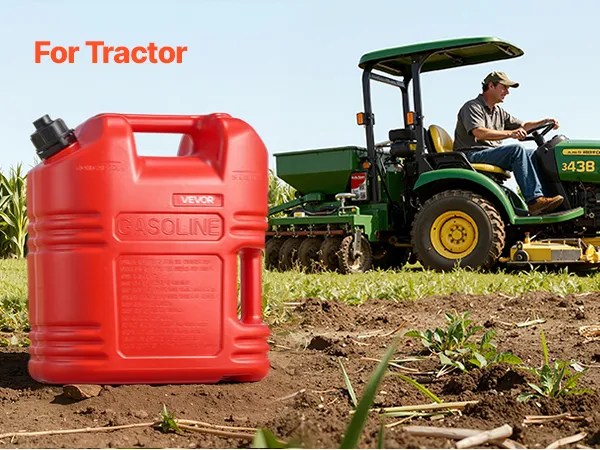
The length of the spout extension puts the pour outlet exactly over the fuel filler necks on cars, motorcycles, ATVs, and UTVs without having to tip the container awkwardly, which can stress the body or make it harder to control the flow. The 2-pack's clean, drip-free transfer from both containers helps reduce fuel waste during repeated refueling operations.
Raised Scale Markings on Each 19L Unit Enable Fast Dual-Container Inventory
Both containers have permanently molded scale markings on the exterior sidewalls that show how much fuel is left in liters. Raised molded markings stay clear even after being splashed with fuel, exposed to the weather, and being handled many times. This is not the case with adhesive-label scales, which dissolve and peel after only brief contact with fuel.
Managing two containers separately, with clear volume visibility, enables accurate fuel rationing between two vehicles or two pieces of equipment that are far apart. Knowing exactly how many liters are left in each plastic fuel container stops the important planning mistake of sending out both units, thinking they are full when one may have been partially used on a previous trip.
Red 13.4 x 9.1 x 15.2 in. Flat Profile Fits Cars, Motorcycles, ATVs & UTVs
The standardized red color of both containers follows common conventions for identifying gasoline. This feature makes it easy to distinguish between gasoline containers and those for water, diesel, and oil in mixed-fluid storage areas. Red HDPE coloring is molded throughout the wall, so it stays visible even after scratches and UV exposure that would make color coding on less durable containers hard to read.
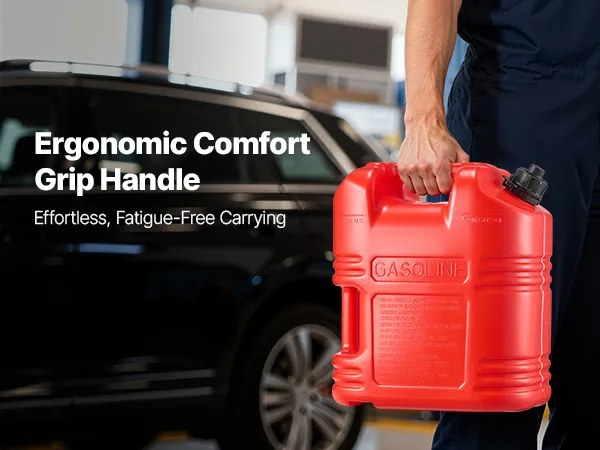
The flat profile of each unit, which is 13.4 x 9.1 x 15.2 inches, fits in the storage space of passenger car trunks, motorcycle saddlebags, ATV rear platforms, and UTV beds. The 9.1-inch flat depth is the most important fitment dimension because it lets you reach shallow storage areas that standard-depth jerry cans can't. Both containers fit side by side in the same cargo footprint as a single round 5-gallon can.